
Fairfax County Active Warrants Explained
Fairfax County Active Warrants Explained An active or outstanding warrant is process the issuing authority has neither served nor withdrawn. In Fairfax County, the practical public check runs through the Sheriff's Warrant Desk, not an online name list. The Sheriff's FAQ points people to 703-246-4231. Ask which court or Virginia locality issued the matter. Ask which clerk can confirm its current status. Several courts split the records here. Fairfax County General District Court, Circuit Court, City of Fairfax GDC, and JDR each hold different files. Herndon and Vienna matters run through county GDC divisions. A blank result in one court system settles nothing about what another court or law-enforcement office holds.
Fairfax County Has No Public Warrant Roster
Fairfax County posts no public roster of criminal active warrants. The Sheriff, the police, the courts, and the state judiciary simply do not publish a name-search list. That gap is real, but it is not a reason to trust a commercial search product. If you have an arrest-warrant question, the Sheriff points you to its Warrant Desk. Virginia Online Case Information can pull up some adult case records, though it is not a complete active-warrant database, and the county publishes no update schedule for criminal warrants. Check the official Sheriff FAQ and ask the issuing clerk what the record means. There is also no Fairfax-wide warrant count to cite, so treat any Crime Solvers program total as a tips tally, not an outstanding-warrant caseload.
How Fairfax County Tracks Active Warrants
"Active" describes a warrant that can still be executed in the issuing system. It is not a promise that a public page will display it. A court issues the warrant, an authorized officer serves it, and a judge may withdraw it after a motion or an appearance. The clerk's case file and the Sheriff's confirmation route answer different parts of that chain. Because Fairfax County publishes no criminal roster, it publishes no refresh time for one either. When a result appears or disappears online, check it against the clerk's record and the Warrant Desk. Keep any signed withdrawal order or receipt you receive.
Note: A closed payment entry, a missing search hit, and a withdrawn warrant are different things; ask the issuing court which status applies.
Why Fairfax Civil Records Do Not Fill the Gap
The Sheriff's Civil Enforcement System is public, but it covers civil process for specified Fairfax County GDC cases. Its Plaintiff/Defendant and Case Number fields do not search criminal arrest warrants. A "warrant in debt" just brings a civil claim before the court; it authorizes no arrest. The page itself warns that its display may be inaccurate or outdated and that official court records control. So a civil result can never stand in for an active-warrant check. For criminal status, use the Sheriff phone route and the clerk of the court that issued the warrant.
Inside an Active Warrant Record
Fairfax County exposes no public criminal warrant record card, so a court or agency file may hold more than any resident can see. The general fields below describe what such a file can contain. No public criminal warrant-number pattern exists to follow, and do not infer one from the Sheriff's civil example, GV1234567890. That number belongs to a different system.
| Issuing office | Court or magistrate that authorized the process |
|---|---|
| Process type | Arrest, bench, FTA, capias, or another court order |
| Case and charge | Local case identifier and offense description, where available |
| Service status | Active, served, returned, withdrawn, or another court status |
| Bond conditions | Set for the individual case; no general county schedule was found |
Ask the clerk to explain a status term before treating it as clearance.
Fairfax County Warrant Alerts Stay Internal
Fairfax County Police describes active-warrant alerts as part of its law-enforcement license-plate-reader operations. An officer may get an alert when a plate is linked to a person with an active arrest warrant. That is an internal investigative category, not a public search tool or a county roster. The Police page also separates these alerts from civil warrants, parking matters, and other records. The public cannot use the alert system to check a personal case. Call the Sheriff and the court that issued the warrant instead. Read Fairfax County's RTCC and LPR transparency page for the system description.
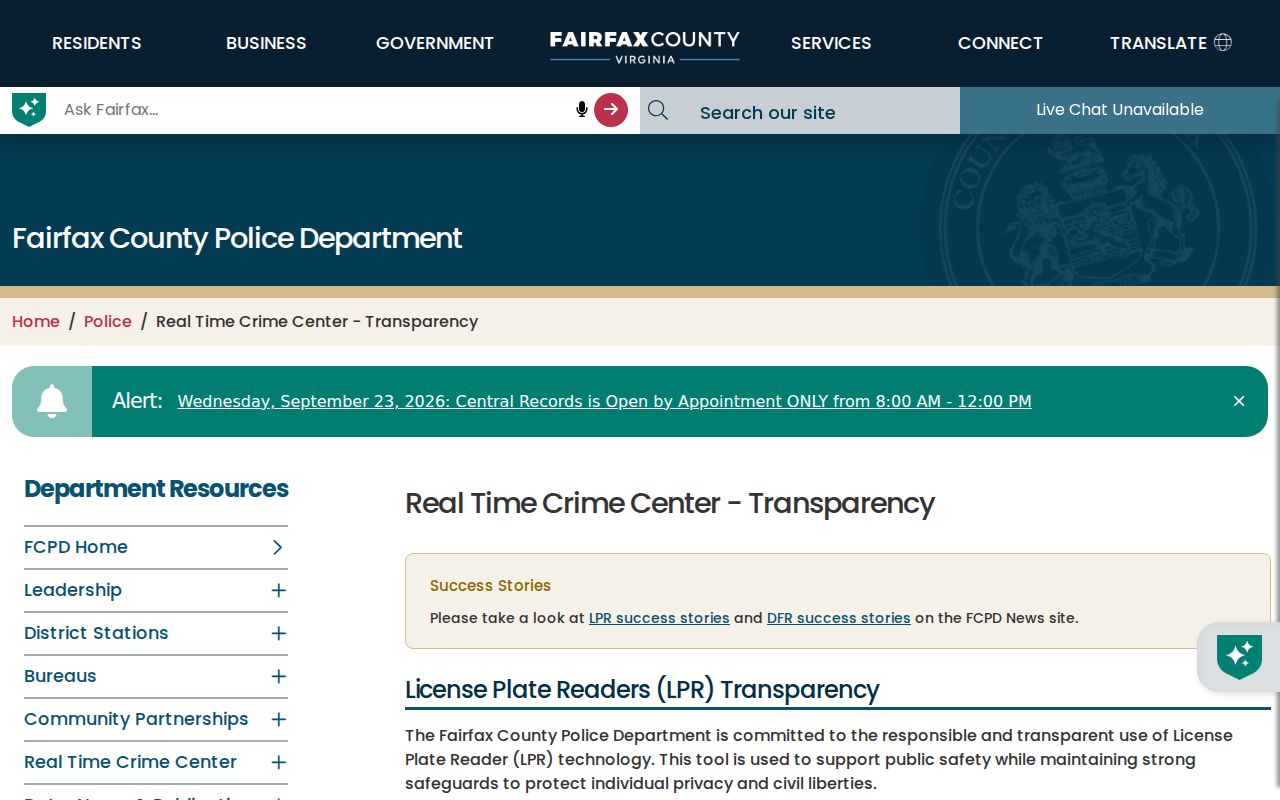
An internal Fairfax County alert is not public access to the underlying court file.
Warrant Roundups and Most-Wanted Lists
Fairfax County runs no current named warrant roundup, no amnesty week, and no complete active-warrant list in its official materials. Crime Solvers of Fairfax County is a community tip-and-reward program, not a public warrant database, and FCPD does not run it. Its official page explains how to send information; it is a tips channel, not a roster to browse.
Use the source directly: Crime Solvers of Fairfax County describes the program and its anonymous tip routes. It is not a way to confirm a personal warrant.
Aggregate program outcomes are historical program information, not a current Fairfax County warrant count.
Fairfax County Publishes No Amnesty Roundup
No Fairfax County office runs a safe-surrender day, a warrant amnesty event, or a fine-reduction roundup. The reliable path runs through the issuing clerk, a motion where appropriate, counsel, and the magistrate or Adult Detention Center if surrender or bail is required. GDC payment plans and community-service options can ease eligible court debt, but they are not a general amnesty. Do not wait for a roundup, and do not assume an online list will clear itself. If a GDC date was missed, ask the Criminal or Traffic Clerk about the Motion to Withdraw the Bench Warrant or Failure to Appear Warrant.
Your Name on the Warrant List
Think a Fairfax County record carries your name? Call the Warrant Desk first. Ask which court issued the warrant, the case number, its current status, and what step comes next. The clerk of that issuing court handles docket and motion questions once you have them. Missed a court date while out on bond or supervised release? Tell the bonding company or your counselor right away. A lawyer can then weigh whether a motion, an appearance, a surrender, or a bond fits your situation best.
Important: Confirm a warrant with the Sheriff or court before traveling. No caller can clear a Fairfax County warrant by demanding an electronic payment.
Keep a copy of whatever the court orders, and ask the clerk how long its records take to update. For confirmation that a Fairfax County warrant is truly cleared, call the Sheriff's Warrant Desk, not the Civil Enforcement search.
Confirming a Fairfax County Warrant
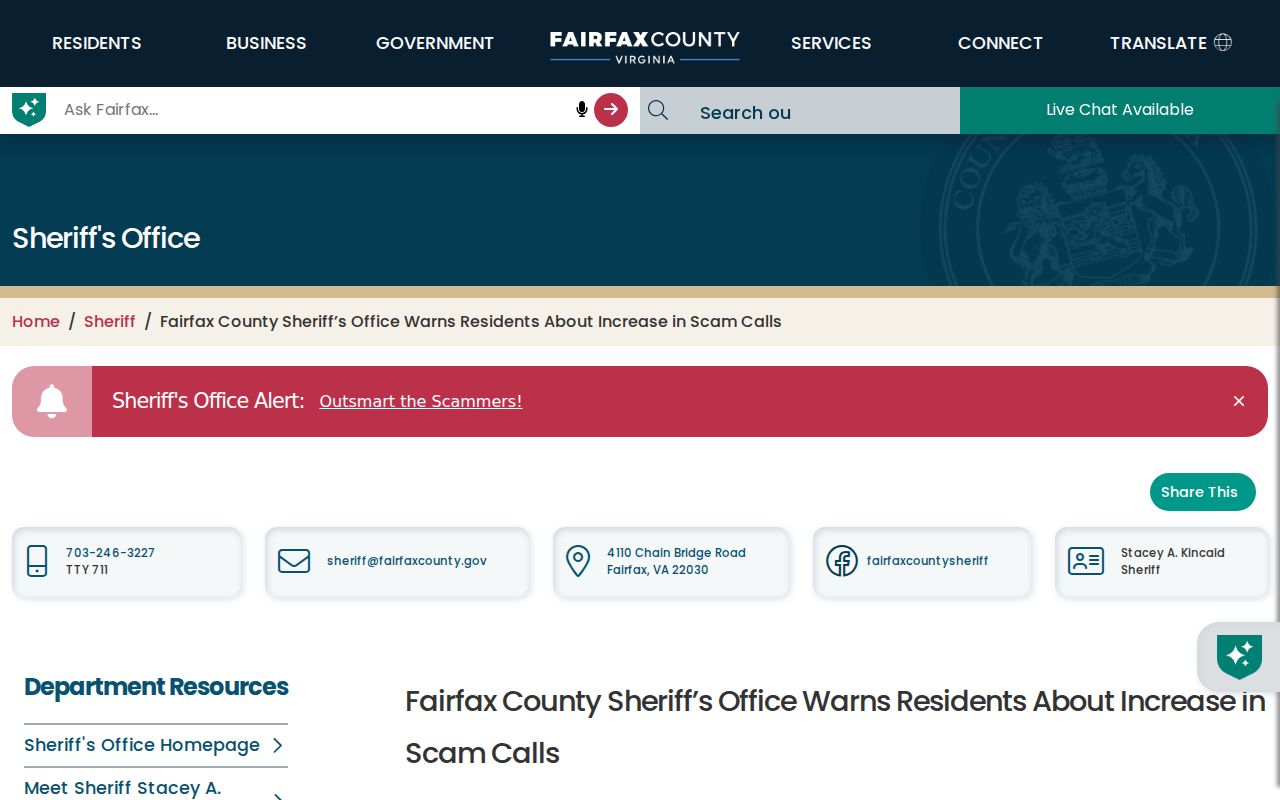
In September 2025 the Sheriff warned Fairfax County residents about callers posing as deputies. The scam: a fake warrant, resolved only through money, gift cards, or electronic payment. Real deputies do not collect bond that way. The official advice was blunt. Hang up, share nothing personal or financial, and contact the Sheriff directly. That warning doubles as a general rule for any caller who pressures you about an active warrant. Call back using a number listed on the county's own page, and for anything court-related, speak with the issuing clerk. Never pay through a caller's link, and never mistake a paid report or advertisement for a court order. Open the Sheriff's warrant-payment scam notice to read its safety instructions in full.
For the full Fairfax County warrant check and resolution chain, follow the steps on Fairfax County Warrant Records.